
The Unsung Heroes of Health Care
Insights
The Unsung Heroes of Health Care
Posted on 04.22.26

Across Colorado and Texas, nearly 300 employees from Artemis and its joint venture partner, Aptive, serve as the operational backbone of VA clinics, hospitals and medical centers, scheduling appointments, managing records and making sure Veterans feel seen from the moment they walk in the door.
When a Veteran walks into a Department of Veterans Affairs clinic, the first person they encounter usually is not a physician or a nurse. It is a medical support assistant (MSA), someone responsible for scheduling appointments, verifying eligibility, managing patient records and ensuring the visit begins smoothly. That first interaction can set the tone for everything that follows.
For Artemis and Aptive, that moment matters tremendously. Together they deploy close to 300 MSAs and advanced MSAs at VA facilities across Colorado and Texas, from large medical centers in Denver and Houston to community-based outpatient clinics serving rural Veterans hours from the nearest hospital.
What an MSA Actually Does
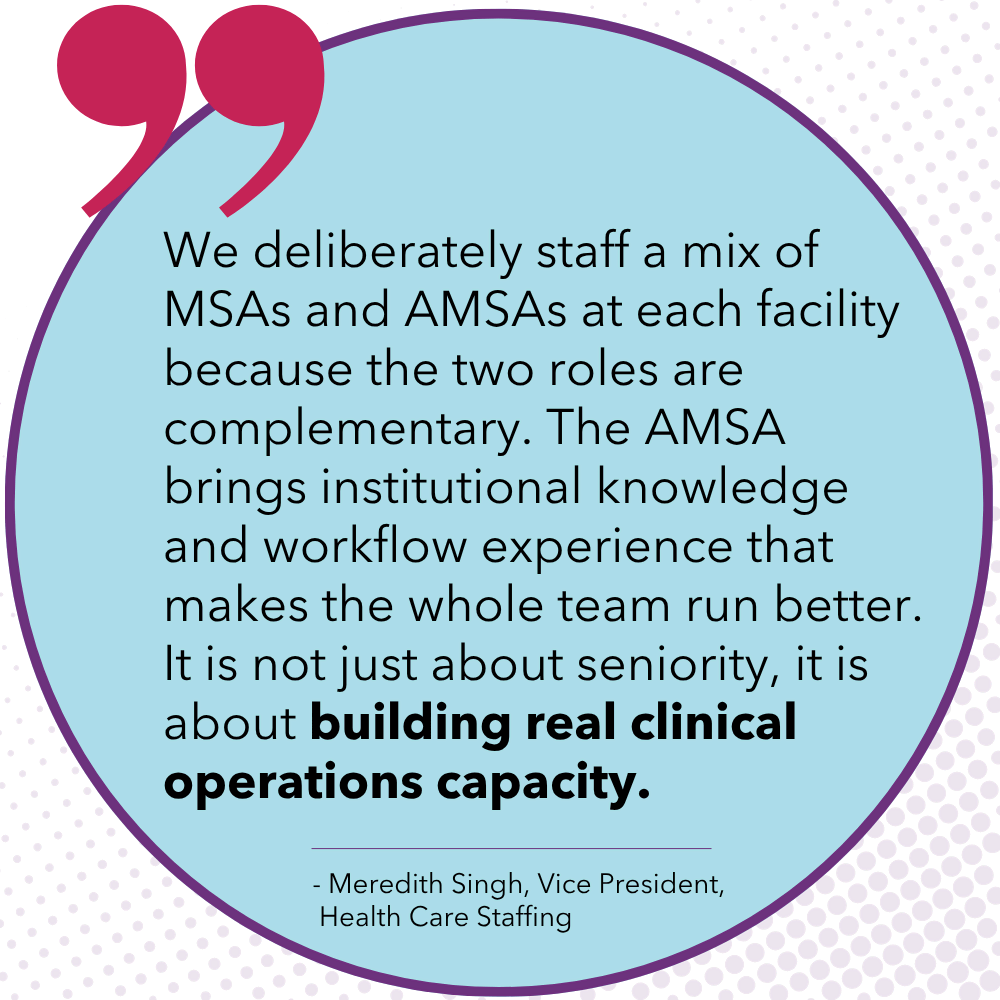
The role of a medical support assistant is broader than many people realize. At its core, the position blends administrative precision with direct patient interaction, a combination that requires both technical competency and interpersonal sensitivity, particularly in a VA setting where patients may be managing complex service-connected conditions, mental health challenges or limited mobility.
MSAs handle appointment scheduling across multiple clinical services, coordinate referrals, check in patients upon arrival, manage incoming correspondence and process medical documentation. In an electronic health records environment, they are also responsible for maintaining accurate data in systems such as VistA and CPRS, the platforms that VA clinicians depend on to deliver care.
Advanced medical support assistants take on expanded responsibilities. AMSAs often serve in lead or supervisory-adjacent roles, providing guidance to other support staff, coordinating workflow across departments and stepping in on more complex administrative tasks. They may also act as the primary liaison between clinical teams and administrative leadership, flagging scheduling bottlenecks or patient experience issues before they escalate.
Why the VA Setting is Different
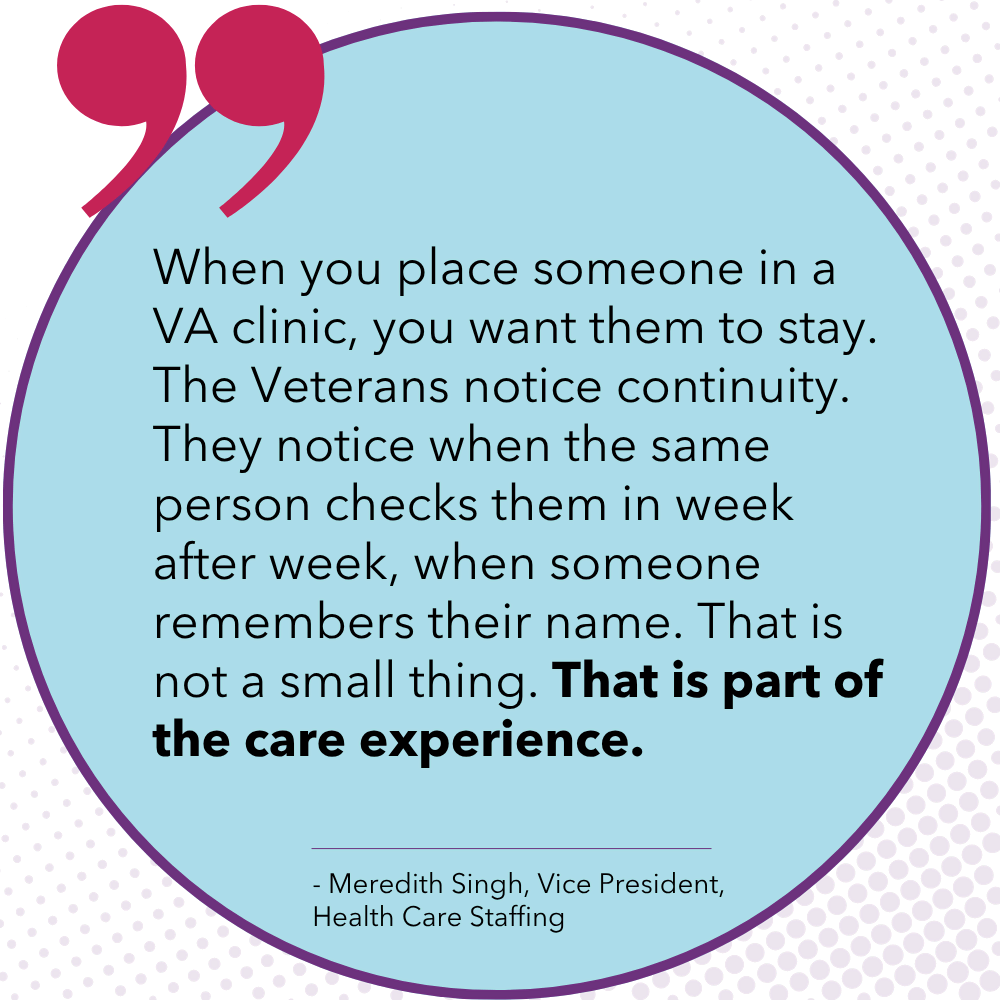
Working in a VA facility is not the same as working in a commercial health care setting. The patient population has distinct needs. Many Veterans have experienced trauma. Some are navigating the VA benefits system for the first time and do not fully understand what they are entitled to. Others have been in the system for years and have established expectations about how they want to be treated. An MSA who understands that context, and who approaches every interaction with cultural competency and patience, can meaningfully improve a Veteran’s experience of care.
VA facilities also operate within a federal regulatory and administrative framework that adds layers of complexity not found in civilian health care. MSAs must be familiar with federal privacy requirements, military discharge documentation, eligibility determinations and the particular cadence of VA scheduling protocols. Learning those systems takes time, and turnover can be costly both to operations and to Veteran trust.
That is part of the reason Artemis invests in onboarding and retention for its MSA workforce. The goal is not simply to fill positions, but to build a stable, experienced cohort of professionals who know their facilities and the Veterans they serve.
Portraits from the Field
Artemis’s Colorado footprint spans facilities ranging from urban outpatient clinics to rural community-based sites serving some of the most geographically isolated Veterans in the country. The people working in those settings often have deeply personal reasons for doing so.

Denise James
Eastern Colorado Health Care System, Office of Community Care
Denise James is a fixture of the VA Eastern Colorado Health Care System’s Office of Community Care, where she processes medical records and supports scheduling to help ensure Veterans receive timely access to care. Over time, she has also become a trusted resource for fellow MSAs, offering guidance on processes and medical record handling at the request of her supervisors. In total, James has worked with VA for nearly eight years. Across departments and roles, one thing has remained constant: her connection to the Veterans she serves. “I love working for VA,” she says. “I’ve always loved the Veterans.”

Kyarington George
Office of Community Care, Glendale, Colorado
Kyarington George supports Veterans through the Office of Community Care in Glendale, Colo., helping ensure they get scheduled and connected to the care they need. The work is steady and demanding, but for George, it is anchored in something larger than the day-to-day tasks. “I like working at VA because it feels meaningful,” she says. “I’m helping Veterans, and it’s more than just a job to me. Knowing I’m part of making their experience a little easier means a lot.” That sense of purpose, rooted in both the mission and the close-knit team around her, reflects what Artemis looks for across its MSA workforce: people who show up not just to fill a role, but to make a difference for the Veterans who depend on them.

Ethan Looney
VA Clinic, Lamar, Colorado
Ethan Looney grew up understanding how military service impacts a family. His grandfather, a Vietnam Veteran, retired from Fort Polk as a drill sergeant. His stepfather served as a Marine during the Korean War. By the time Looney took a position as an MSA at the VA clinic in Lamar, Colo., the work was already personal. “My favorite part of my job is that I am part of the group that is providing support and medical help to the women and men of our country that put their lives on the line willingly to protect us,” he says. Looney lives in Las Animas, Colo., a small town in the southeastern corner of the state, and commutes to the Lamar clinic — itself a community-based outpatient facility serving Veterans across a wide, rural stretch of the Arkansas River valley. In that part of Colorado, VA is often the primary health care lifeline for Veterans who have few other options nearby. “VA is a close-knit group of people who are providing support to those who gave up a lot in their lives for us,” Looney says. “Sometimes those Veterans can struggle to find help when it is needed. Being able to be part of the answer to that — that brings me joy.”
Scaling Support Across Two States
Managing a workforce of nearly 300 people spread across two large states requires infrastructure. Artemis and Aptive maintain a dedicated account management and quality assurance structure for their health care staffing contracts, with program managers working closely with their teams.
That proximity matters. When a staffing gap opens up at a community clinic in El Paso or a scheduling backlog develops at a Colorado Springs outpatient center, our team can respond quickly, sourcing qualified candidates from existing pipelines, conducting targeted outreach to Veterans with administrative backgrounds and coordinating with VA to ensure coverage is maintained without disruption to patient services.
Singh says the company’s scale in this space also creates advantages for the employees themselves. “We can offer career progression across our portfolio,” she said. “Someone who starts as an MSA at a community clinic in Texas may grow into an AMSA role, take on a lead function or transition to a larger facility with more complex operations. That kind of pathway matters for retention, and retention matters for Veterans.”
The Road Ahead
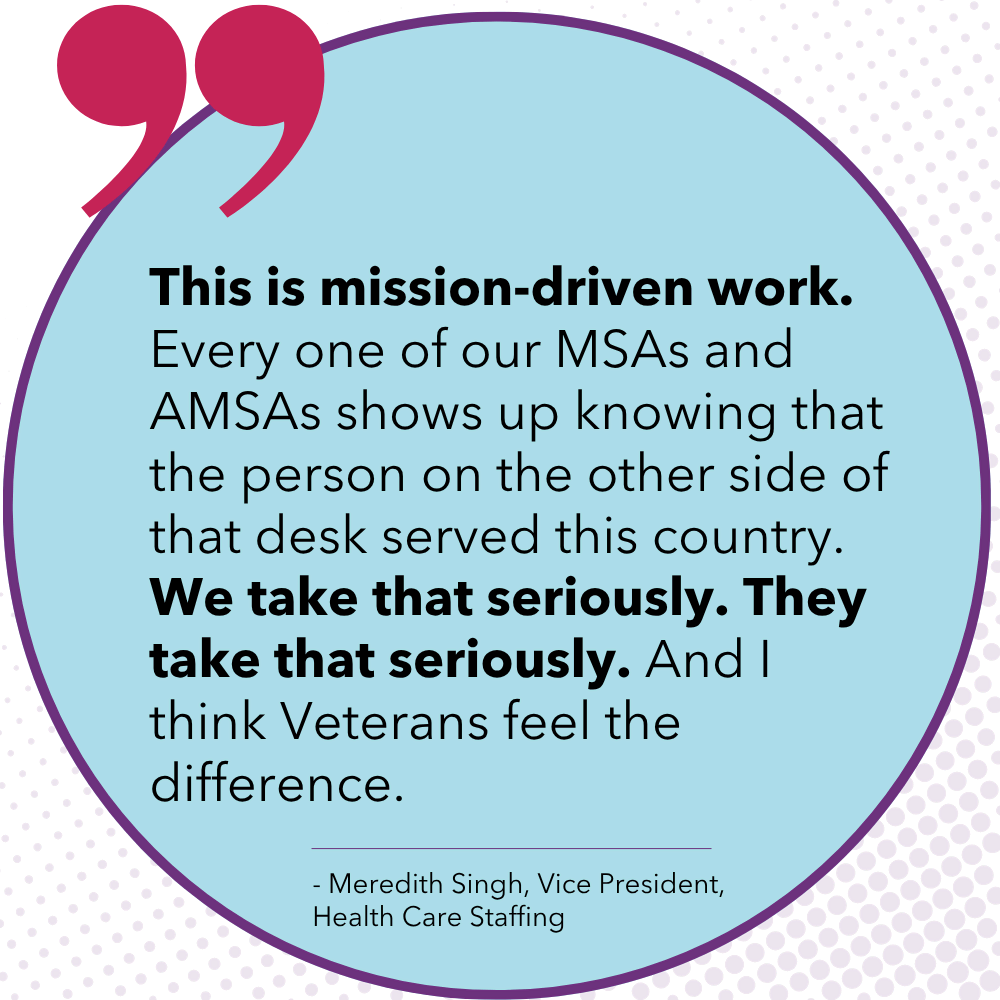
Demand for qualified VA administrative support staff is not shrinking. VA continues to expand access to care through community-based outpatient clinics, telehealth programs and the Mission Act’s community care provisions, all of which require robust administrative infrastructure to function. MSAs sit at the center of that infrastructure.
Artemis is proud to stand alongside VA in delivering that experience, bringing qualified, dedicated professionals to facilities across Colorado and Texas who show up every day ready to serve Veterans.